

You put money into an investment because you want it to do something over time. It might rise in value. It might pay you an income. Ideally, it does both.
That is the basic idea behind investing. You buy an asset and hold it with the expectation that it will give you something back in the future. Stocks, bonds, mutual funds and ETFs all work differently, but they give investors different ways to put their money to work.
The catch is that nothing is guaranteed. An investment worth $1,000 today could be worth $1,200 later, but it could also fall below the amount you originally put in.
How do investments make money?
Investment returns generally come from two places: price growth and income.
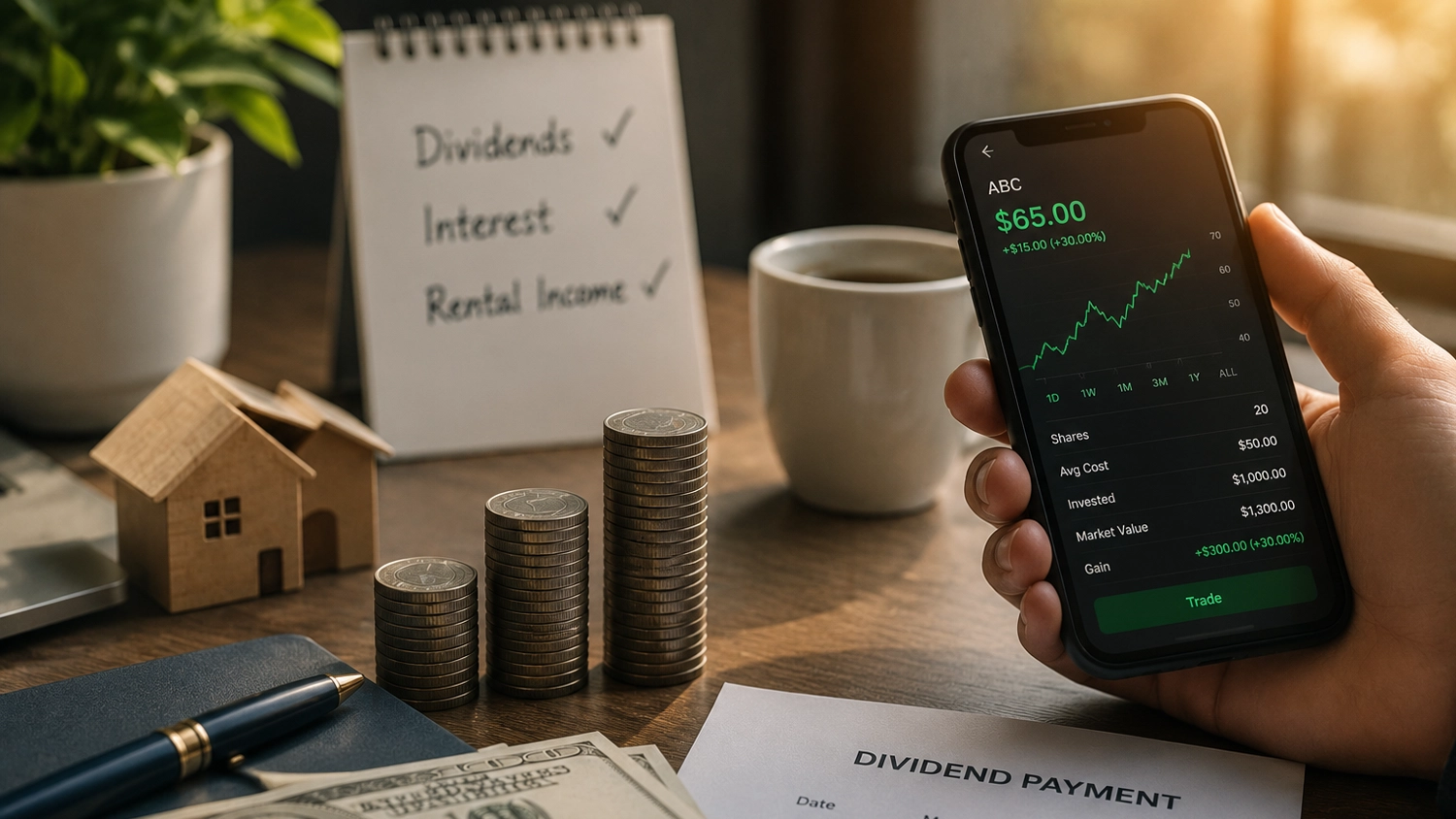
Say you buy 20 shares at $50 each. Your investment is worth $1,000. If the share price reaches $65, those shares are now worth $1,300. You have gained $300 on paper. Selling the shares would turn that increase into a realised gain, before any applicable costs or taxes.
Income works differently. You do not necessarily need to sell an investment to receive money from it. A company may pay dividends to its shareholders, while a bond can pay interest to its holder. Property can generate rental income.
Some investments offer both sources of return. A stock, for example, could increase in price while paying dividends along the way.
Where does compounding come in?
Suppose you invest $1,000 and earn a return of $70. If you leave that money invested, your next return is based on $1,070 rather than the original $1,000.
The numbers become more meaningful as this continues.
That is compounding. Your investment earnings remain in the portfolio and can produce earnings of their own. Over a long enough period, even relatively small amounts of growth can build on one another.
Regular contributions can make the difference even larger. Someone who adds $200 every month is giving the portfolio new money to grow, while earlier contributions continue to compound.
This is one reason time matters so much in investing. A person starting in their 20s has more years for contributions and investment returns to accumulate than someone starting much later.
What happens when investments fall?
They do.
Markets go through periods of strong growth, sharp declines and everything in between. A company can lose customers, an industry can fall out of favour, or higher interest rates can put pressure on asset prices. Sometimes the whole market declines at once.
What matters is how much of that risk you are taking on.
Putting your entire portfolio into one company leaves you heavily dependent on what happens to that business. If it has a difficult year, your portfolio will feel the impact directly.
Holding a mix of investments changes the picture. You might own shares across several industries, along with bonds or funds that contain many different securities. This approach, known as diversification, means one disappointing investment does not necessarily determine the result for the entire portfolio.
It does not make losses disappear. A broad market decline can still affect a diversified portfolio. It simply spreads your exposure.

Why does the time horizon matter?
The right investment for someone saving for retirement may look very different from the right choice for someone who needs their money next year.
Imagine putting money aside for a house deposit. If you expect to need that money soon, a large market decline at the wrong moment could leave you with less than you planned to spend. A retirement investor with several decades ahead may have more time to wait through periods of weakness.
This is why investors often think about their time horizon before choosing an asset. The question is not only how much an investment could earn. It is also whether you can afford to wait when its value falls.
How do you actually start investing?
There is no single route into the market.
You could open a brokerage account and choose individual stocks yourself. You could buy funds that hold a collection of assets. Or you could use a managed portfolio if you would rather leave much of the day-to-day decision-making to a professional or automated service.
The amount you invest is another decision. You do not necessarily need a large lump sum to begin. Regular contributions can be easier to maintain, particularly when investing is part of a monthly budget.
Before choosing an investment, look at the money you have available, when you expect to need it and how you would feel if its value dropped. Those answers can narrow down the choices considerably.
The Bottom Line
Investing is the process of putting money into assets that may grow in value, generate income, or both. The returns can come from price appreciation, dividends, interest or other sources.
There will be good periods and bad ones. Some investments will perform better than others, and even a carefully chosen portfolio can lose value.
For someone investing over the long term, the process is largely about giving money time, adding to it when appropriate and accepting that growth comes with uncertainty. The choices you make should reflect what the money is for, when you will need it and how much fluctuation you can live with along the way.


Leave a Reply