
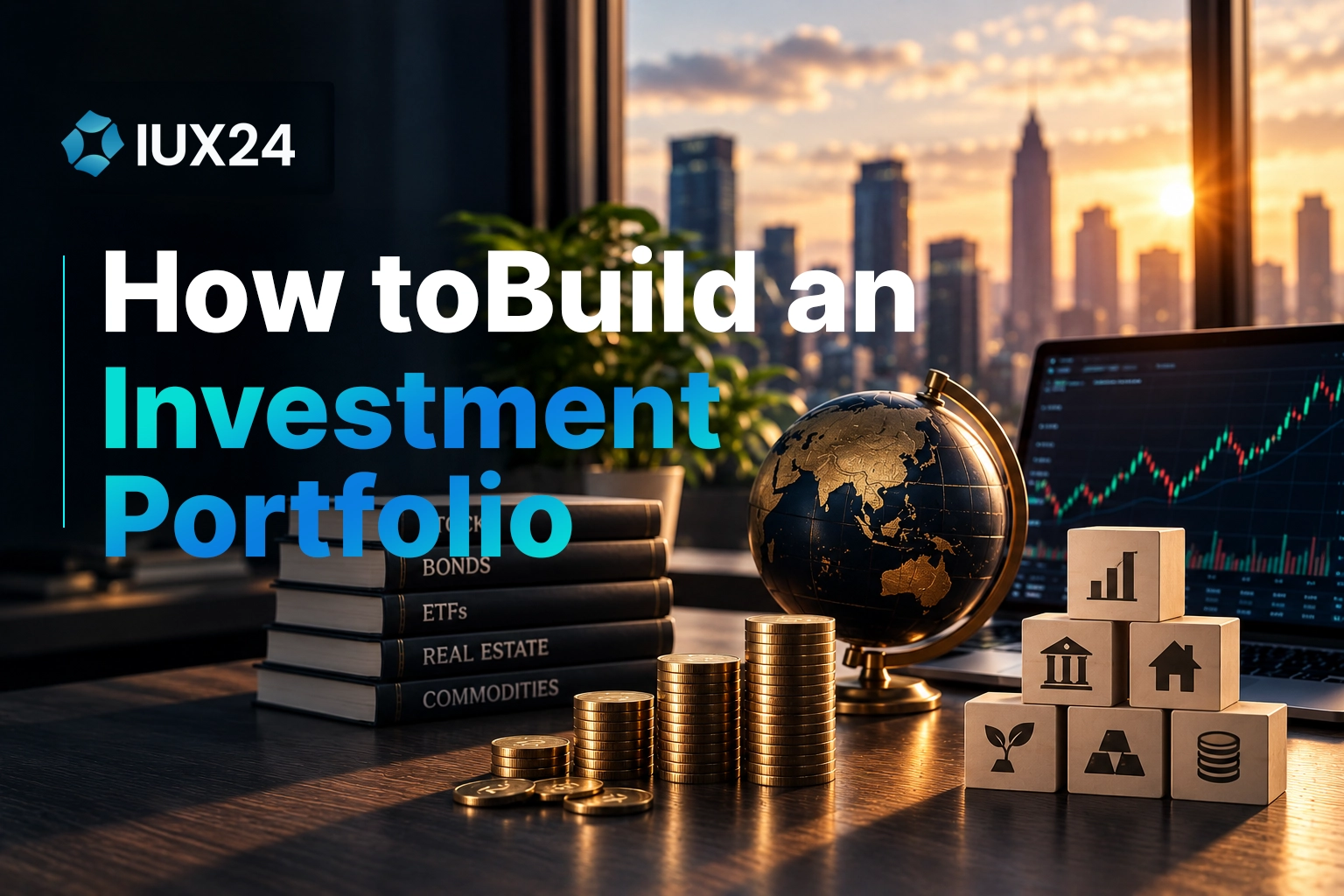
Building an investment portfolio means choosing a mix of investments that work together toward your financial goals. Rather than putting all your money into one asset, a portfolio can spread your money across stocks, bonds, funds, cash, and other investments with different risk and return characteristics.
There is no single portfolio that suits everyone. The right mix depends on what you are investing for, how long you plan to stay invested, and how much risk you are comfortable taking.
Here is how to build an investment portfolio step by step.
Start With Your Financial Goals
Before choosing investments, decide what you want the portfolio to achieve.
You might be investing for retirement, buying a home, paying for education, or building wealth over the long term. Each goal has a different time horizon, and that affects how much investment risk you may be willing to take.
Someone investing for a goal that is several decades away may have more time to recover from short-term market declines. A person who expects to need the money within a few years may prefer a portfolio with greater stability and liquidity.
The key is to connect your investments to a specific purpose rather than choosing assets simply because they have performed well recently.
Consider Your Risk Tolerance
Risk tolerance refers to how much uncertainty and potential loss you are comfortable accepting.
Think about how you might react if the value of your portfolio fell significantly during a market downturn. Would you be comfortable staying invested, or would a large decline make you want to sell?
Your financial situation matters too. Income, savings, debt, upcoming expenses, and the amount of money you may need at short notice can all influence how much investment risk is appropriate.
Risk tolerance and time horizon work together. A long investment horizon may give you more time to recover from market fluctuations, but that does not mean you need to take more risk than you are comfortable with.
Choose an Asset Allocation
Asset allocation is the way you divide your portfolio among different types of investments.
Common asset classes include:
- Stocks, which may offer greater long-term growth potential but can experience substantial price swings.
- Bonds, which generally provide more stable returns than stocks but still carry interest-rate and credit risk.
- Cash and short-term investments, which tend to offer greater stability and liquidity but usually have lower long-term return potential.
- Property and other assets, which may provide additional sources of return and diversification.
A portfolio focused heavily on growth assets may experience greater volatility. Adding more defensive or lower-volatility assets may reduce those swings, although it can also reduce the portfolio’s growth potential.
Portfolio construction is therefore a trade-off between risk, return, stability, and liquidity.
Diversify Your Investments
Diversification means spreading your money across different investments rather than relying on one company, sector, or market.
You can diversify across asset classes, industries, geographical regions, company sizes, and investment styles.
For example, holding shares in several technology companies gives you more variety than owning one technology stock, but the portfolio is still concentrated in one sector. Adding companies from healthcare, financial services, industrials, or other industries spreads that exposure more broadly.
Geographical diversification can also reduce dependence on one country’s economy or financial markets.
What matters is not simply the number of investments you own. A portfolio containing many assets that behave in similar ways may still be highly concentrated.
Diversification may reduce the impact of investment-specific losses, but it does not eliminate market risk or guarantee a profit.
Decide How You Want to Invest
Once you know your asset allocation, you can choose the investments that will fill each part of the portfolio.
Some investors buy individual stocks and bonds. Others use mutual funds or exchange-traded funds (ETFs), which can provide exposure to many securities through a single investment.
An ETF that tracks a broad stock market index, for example, may hold shares in hundreds of companies. A bond fund can provide exposure to several issuers and maturities.
Funds can make diversification easier, but it is still important to check what they actually hold. Owning several funds does not necessarily mean you have a well-diversified portfolio if their underlying investments overlap significantly.
Consider investment costs as well. Management fees, trading costs, and other charges reduce the returns you keep.
Think About Liquidity
Liquidity describes how easily an investment can be converted into cash.
If you may need part of your money in the near future, consider how quickly you could access it. Some assets can be bought and sold easily, while others may take longer to sell or may require you to accept a lower price.
Keeping an emergency fund separate from your long-term investments may also reduce the chance that you need to sell assets during a market downturn to cover an unexpected expense.
Invest and Review Your Portfolio
Building a portfolio is not necessarily a one-time decision.
Market movements can change your asset allocation over time. If stocks rise much faster than bonds, for example, stocks may eventually represent a larger share of your portfolio than you originally intended.
Reviewing your investments periodically lets you check whether the portfolio still reflects your goals, time horizon, and risk tolerance.
You may also choose to rebalance the portfolio by adjusting your holdings toward your intended asset allocation.
Your circumstances can change too. As a financial goal gets closer, you may want to reduce exposure to highly volatile investments and place greater emphasis on stability and liquidity.
Building a Portfolio That Fits Your Goals
A well-constructed investment portfolio starts with your goals rather than individual investments. From there, consider your time horizon and risk tolerance, choose an appropriate asset allocation, diversify your exposure, and select investments that fit each part of the portfolio.
The portfolio may need to change as your financial situation and goals evolve. Regular reviews can keep your investment approach aligned with what you are trying to achieve.
Investing always involves risk, and returns are not guaranteed. A thoughtful portfolio cannot remove that risk, but it can spread exposure and create a more balanced approach to pursuing your long-term financial goals.


Leave a Reply