
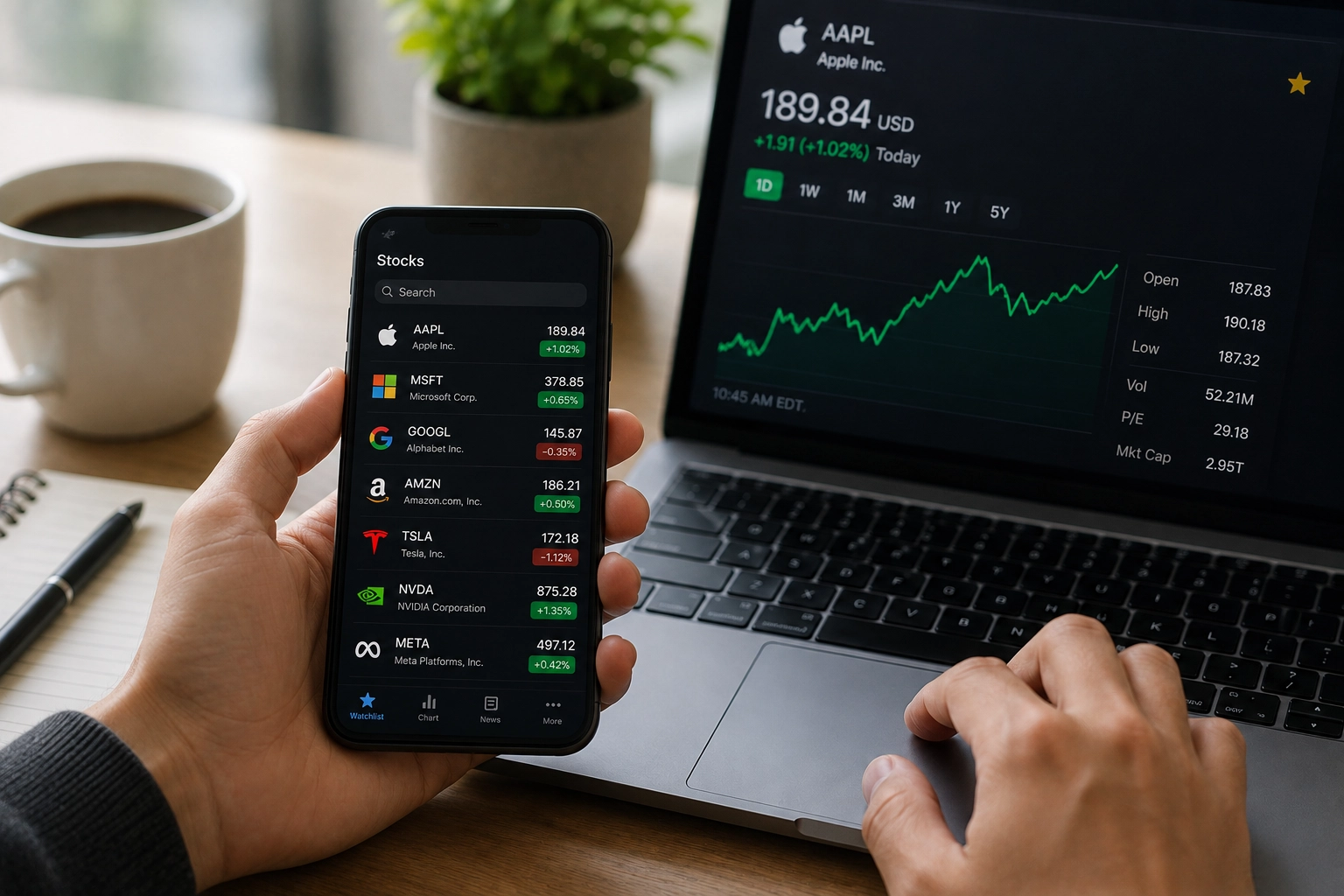
Investing is one way to put money to work for the future. Instead of leaving all of your money in cash, you use some of it to buy assets that may increase in value or provide income.
A person might buy shares in a company, lend money through bonds, or put money into a fund that owns a collection of investments. Property, commodities, and other assets can also be used for investing.
The result can go either way. An investment may be worth more several years later, or less than the amount originally paid. How much it earns depends on the asset, market conditions, and the period it is held.
How Does Investing Work?
Consider a stock that costs $100 when you buy it. If the price reaches $125 and you sell, the difference is a $25 gain per share, before fees and taxes.
The same calculation works in the other direction. A stock bought for $100 that falls to $80 is worth $20 less. If you sell at that price, you have realised a loss.
Not every return comes from selling an investment, though. Some assets pay money while you own them. A company may distribute profits to shareholders through dividends. Bonds can pay interest, and a property investment may produce rental income.
That gives investors a couple of ways to earn from an asset: its value can rise, or it can produce income along the way.

Why Do People Invest?
The reasons vary.
Someone in their 20s might be putting money aside for retirement decades from now. Another investor could be saving towards a home, while someone else may simply want to build wealth over time.
Inflation is part of the picture as well. When prices rise, the same amount of money buys less than it did before. Investments can provide a way to seek returns over a longer period, although there is no certainty that those returns will beat inflation.
Time also changes the way returns can build.
If investment income is reinvested, the money generated by the original investment can become part of the amount invested. Future returns are then calculated on a larger base. This is known as compounding.
It may not seem significant at first. Over decades, it can become much more noticeable.
What Can You Invest In?
There is no single investment that works for everyone.
- Stocks
Buying a stock gives you an ownership interest in a company. If the business grows and investors become more willing to pay for its shares, the stock price may rise. Some companies also pay dividends.
There is plenty that can move a stock in the other direction. Weak earnings, changing interest rates, economic problems, or a shift in investor expectations can all affect its price.
- Bonds
Bonds work differently. When you buy a bond, you are lending money to the issuer, which could be a government, company, or other organisation.
The issuer generally pays interest during the life of the bond and returns the principal at maturity. The return and risk depend on the terms of the bond and the financial strength of the issuer, among other factors.
- Mutual Funds and ETFs
Funds allow investors to own a collection of assets rather than choosing every security individually.
A mutual fund pools money from investors and follows a particular investment strategy. ETFs work in a similar broad sense, although their units trade on an exchange during the day.
A fund might hold hundreds of stocks, a selection of bonds, or investments focused on a particular market or industry.
- Property and Other Assets
Real estate can provide rental income as well as the possibility of an increase in value. Gold and other commodities are also commonly used as investments. Digital assets offer another category, although their prices can be particularly volatile.
Each market has its own drivers. What affects the price of a company share may have little to do with what moves the price of gold or property.
Investing vs. Saving
Saving is generally about keeping money available for future use. A savings account can make sense for an emergency fund or a purchase that is coming up soon because the money is easy to access and its value is relatively predictable.
Investing involves accepting more uncertainty.
The value of an investment can change from one day to the next. That matters if you need the money at a particular time. A market decline just before you need to sell could leave you with less money than expected.
For longer-term goals, investors have more time to live through those ups and downs. The appropriate balance between accessible savings and investments depends on when the money will be needed and what level of fluctuation is acceptable.
What Should You Think About Before Investing?
Start with the goal.
Knowing what the money is for gives you a clearer idea of how long it may need to remain invested. Retirement is a very different target from an expense you expect to pay next year.
Then consider risk. How would you react if the value of your portfolio dropped 10%? What about 20%? The answer can tell you something about the types of investments you may be comfortable holding.
It is also worth looking beyond the potential return. Check how the investment works, what can affect its price, what fees you will pay, and how easily you can sell it.
Spreading money across different investments can reduce the effect of any one investment performing badly. It cannot stop a portfolio from losing value, particularly when markets fall broadly, but it avoids putting the entire outcome on a single asset.
The Bottom Line
Investing means using money to buy assets that may grow in value or generate income. Stocks, bonds, funds, property, commodities, and other investments all provide different ways to do this.
Some investments can lose value. Others may produce income but offer less growth. There is no guaranteed return.
For that reason, investing starts with a practical question: what is the money supposed to do, and when will you need it? The answer can help determine how much risk makes sense, which investments to consider, and how long you may be able to leave the money invested.


Leave a Reply